
September 5, 2004
Everyone was up and at it early that morning as we made our way up the P620 trail and through David & Mubwayaka Lakes. Both were very quiet and had few sites but would probably make an excellent alternative to camping with the bustling activity of Ralph Bice Lake.
After that, the lakes and ponds (Pugawagun L., Pezhaki L., Iagoo L.) became much smaller in size, looking quite similar with their swampy shore lines of tall grass, brown muck and translucent jelly. The portage trails from this point on in the trip were full of tracks well preserved in the dark swamp mud. The trail between a pond and Pupawagun Lake sticks out in my memory as we had to awkwardly cross on top of a beaver dam as part of the trail.
We arrived on Iagoo Lake quite tired after completing a portage which seemed like it forever ascended. This lake was more of the same and the lone site was cramped and required canoeing out to the center of the lake for usable water. Clearly this was not the site that had burned down. We stopped there for lunch and to discuss our options.
We all agreed that staying at a less than enjoyable site and completing a 1.6 km portage first thing the next morning was about as appealing as consuming the translucent goo floating in the water by the shoreline.
Thinking back to our conversation with the park warden about a burned down campsite we surmised that if we pushed on, maybe we would come across this site and at least have some flat land to pitch a tent on for our last night in the park. The old version on of the canoe routes map also had depicted two campsites on Papukiwis Lake that were not on the current version. So we hoped that between these three possibilities, that we would discover a place to camp.
So following a lunch of garlic rice with canned chicken, we made our way to the 1.6 km portage. Although the trail was in relatively good shape, the ever resourceful little beavers of Algonquin Park had created a super dam this turning a small segment of the portage trail into a very deep puddle about 15 ft. wide. We skirted the watering hole unhindered and continued down the footpath leading us to a very sharp decline at the finish. Needless to say were exhausted after completing this twice (once with our packs and once with canoes).
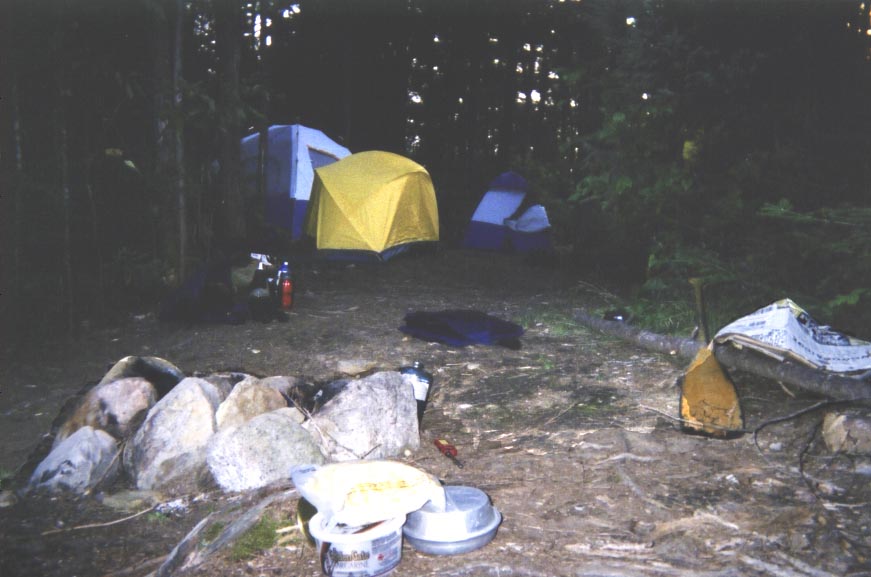
Combing Papukiwis Lake for the lost sites proved futile. Whatever remnants were left from the sites we either completely over grown or flooded out. We did however find a makeshift site at the beginning of the portage to Mama Lake and although slightly cramped, it was usable.
Cam and Andrew scouted ahead on Mama Lake, but there was no sites to be found, so on the portage trail was where we stayed.
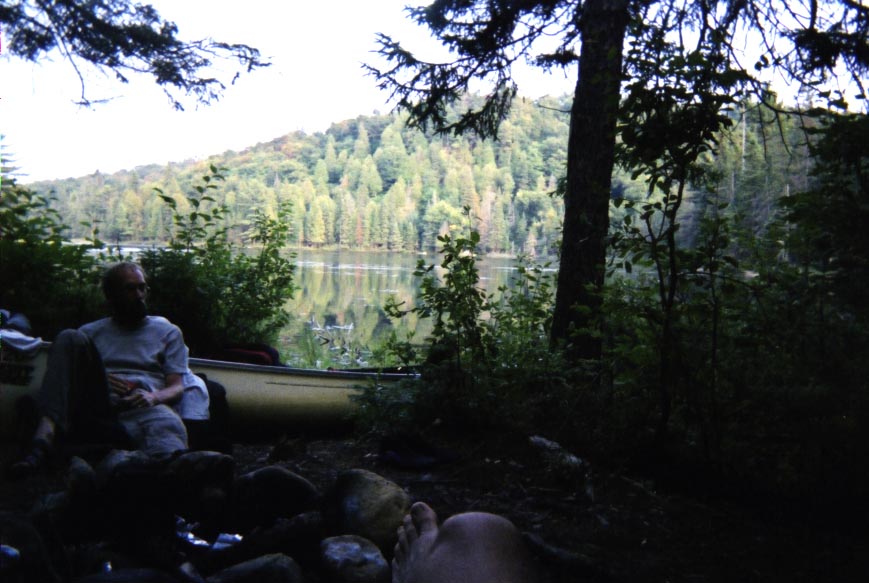
Now it must be stated that it is considered bad etiquette to either dump your alcohol or not finish what you bring on the trip. So once again, upholding tradition, those of use who had some left, finished it.
When it came time to do dishes, not only was the captain (Morgan) talking freely, but Greg and I had to canoe out into the center of the lake, in the pitch black to get access to clean water. Now one must remember when doing dishes, gingerly leaning over the side of a canoe in the darkness, in the center of a swampy lake, to watch out for two things. One is the creatures making strange noises on the opposite shore that you are undoubtedly drifting into, and two, is being sunk by German U-boats. We luckily avoided both and made it safely to bed.